Case study
Kids Color Station
A branded printable platform for families, homeschoolers, and educators
- Problem
- Kids Color Station began as an AI-powered coloring-page generator, but the experience lacked a distinctive identity and placed too much emphasis on generation rather than the content families could use immediately. The product needed a recognizable brand, clearer content discovery, a more dependable printing experience, and an architecture that could expand beyond individual coloring pages.
- My role
- Founder, product designer, brand designer, content strategist, and full-stack developer
- Outcome
- A cohesive, library-first printable platform with more than 100 prepared coloring pages, subject-based discovery, downloadable PDF activity packs, an authenticated custom-generation tool, and a reusable design and content system built for continued growth.
Overview
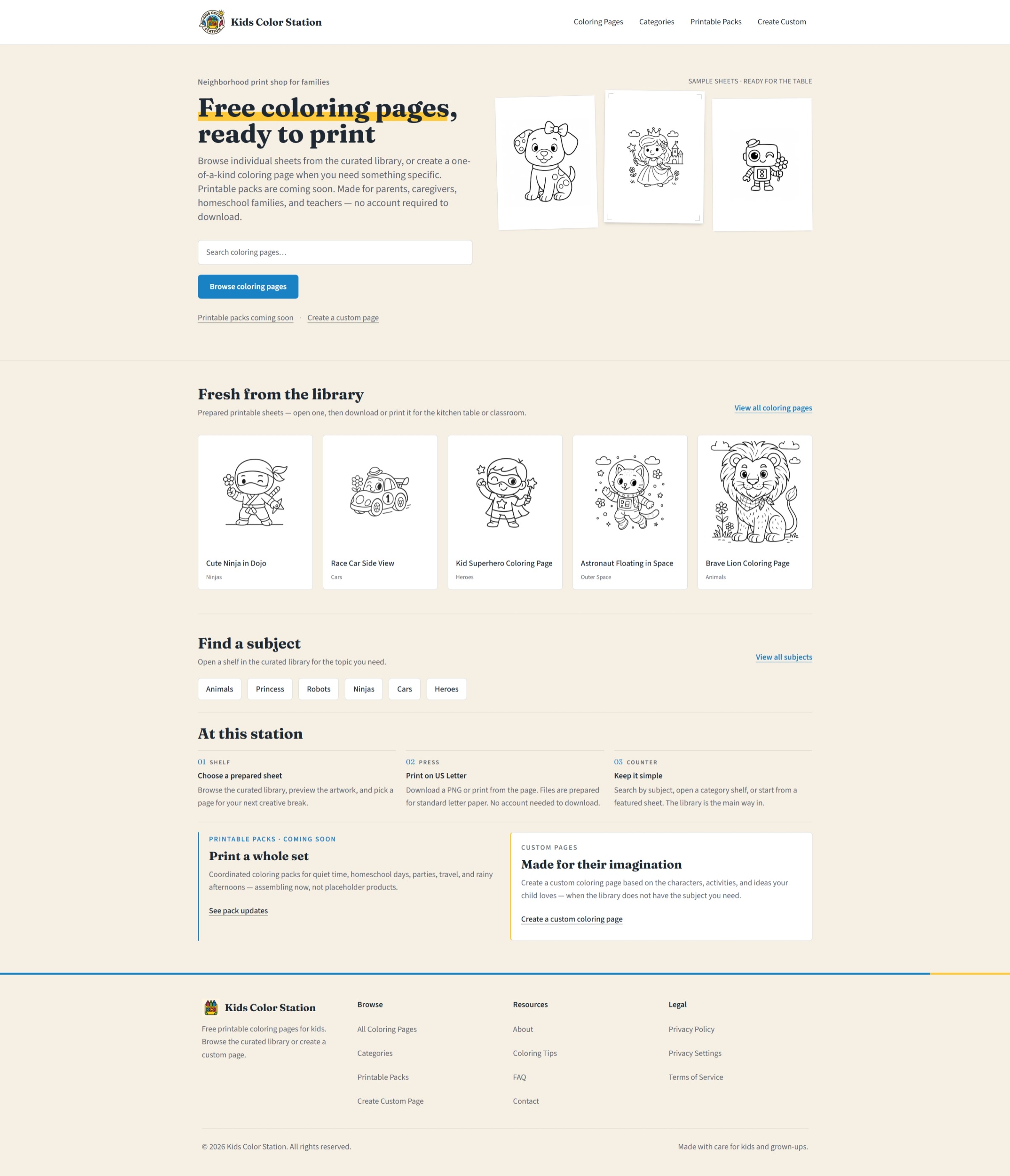
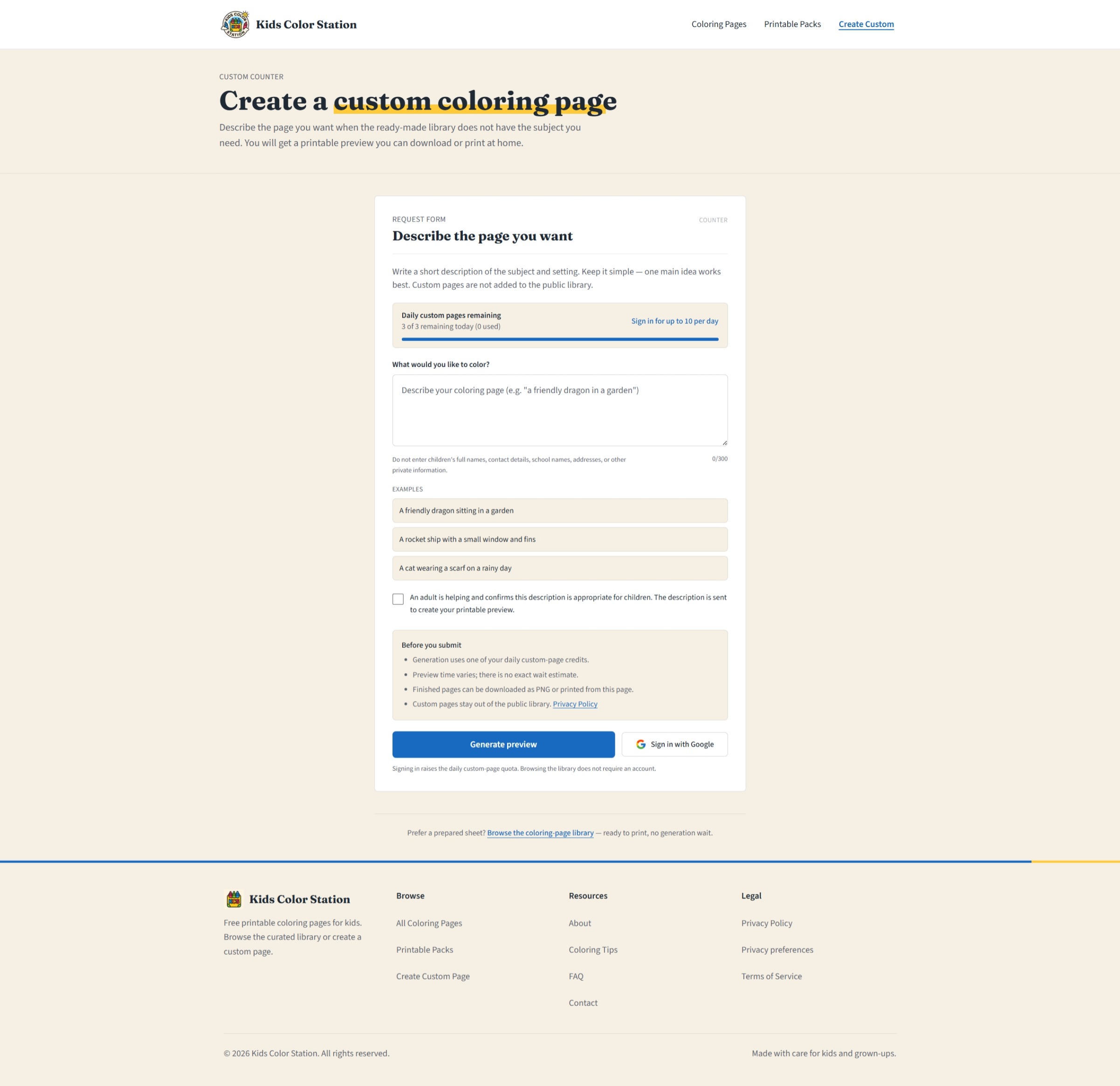
I repositioned Kids Color Station as a “Neighborhood Print Shop for Families” — a friendly digital destination where parents, caregivers, homeschool families, and teachers can quickly find something useful to print. The experience now combines a curated coloring-page library, themed activity packs, and custom AI generation without allowing the technology to overshadow the product.
Role & ownership
I own the complete product lifecycle: brand strategy, interface design, information architecture, front-end development, Firebase integration, AI-generation workflows, printable content production, technical SEO, analytics, accessibility, privacy controls, deployment, and ongoing optimization.
Constraints
- The site needed to feel original and trustworthy rather than like a generic AI content website
- A growing printable library had to remain easy to search, browse, maintain, and validate
- Artwork and activity pages needed to print reliably on standard US Letter paper
- Custom generation required authentication, usage controls, moderation, and clear adult-directed guidance
- The experience had to serve both quick one-page downloads and longer printable activities
- Analytics needed to provide useful product insights while respecting visitor consent
Technical approach
I built the platform in Next.js with reusable components and a structured content system for coloring pages, categories, age guidance, metadata, and printable assets. Firebase supports authentication, generation limits, storage, and user-related workflows, while OpenAI-powered tools support custom coloring-page generation. GA4 captures consent-approved activity such as browsing, searching, printing, downloading, and creating.
Brand & UX strategy
The rebrand deliberately moved away from generic gradients, oversized AI messaging, and interchangeable children’s-site visuals. I developed a “Neighborhood Print Shop” concept using paper-inspired surfaces, registration marks, a crayon-box brand mark, restrained primary colors, and editorial typography.
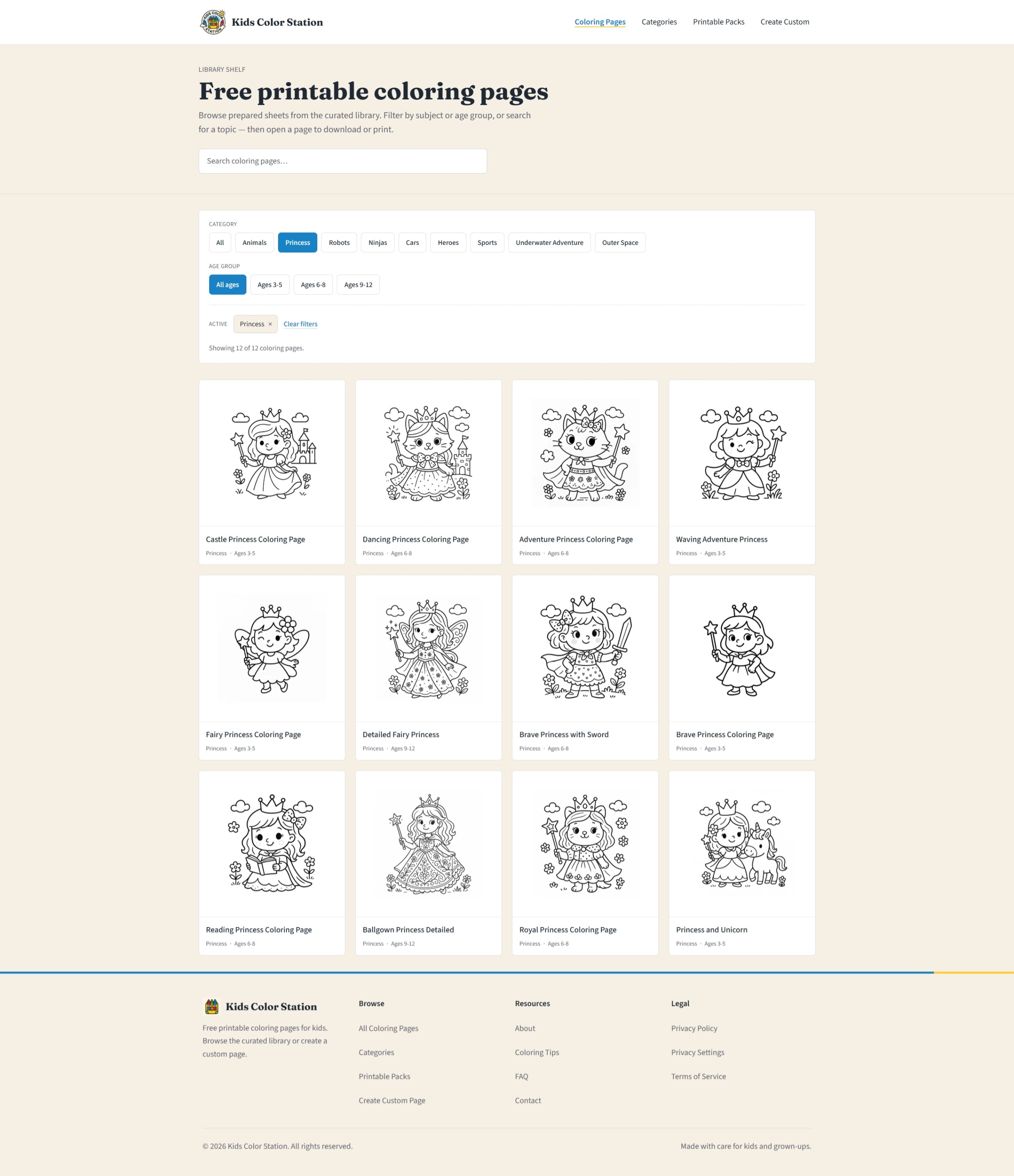
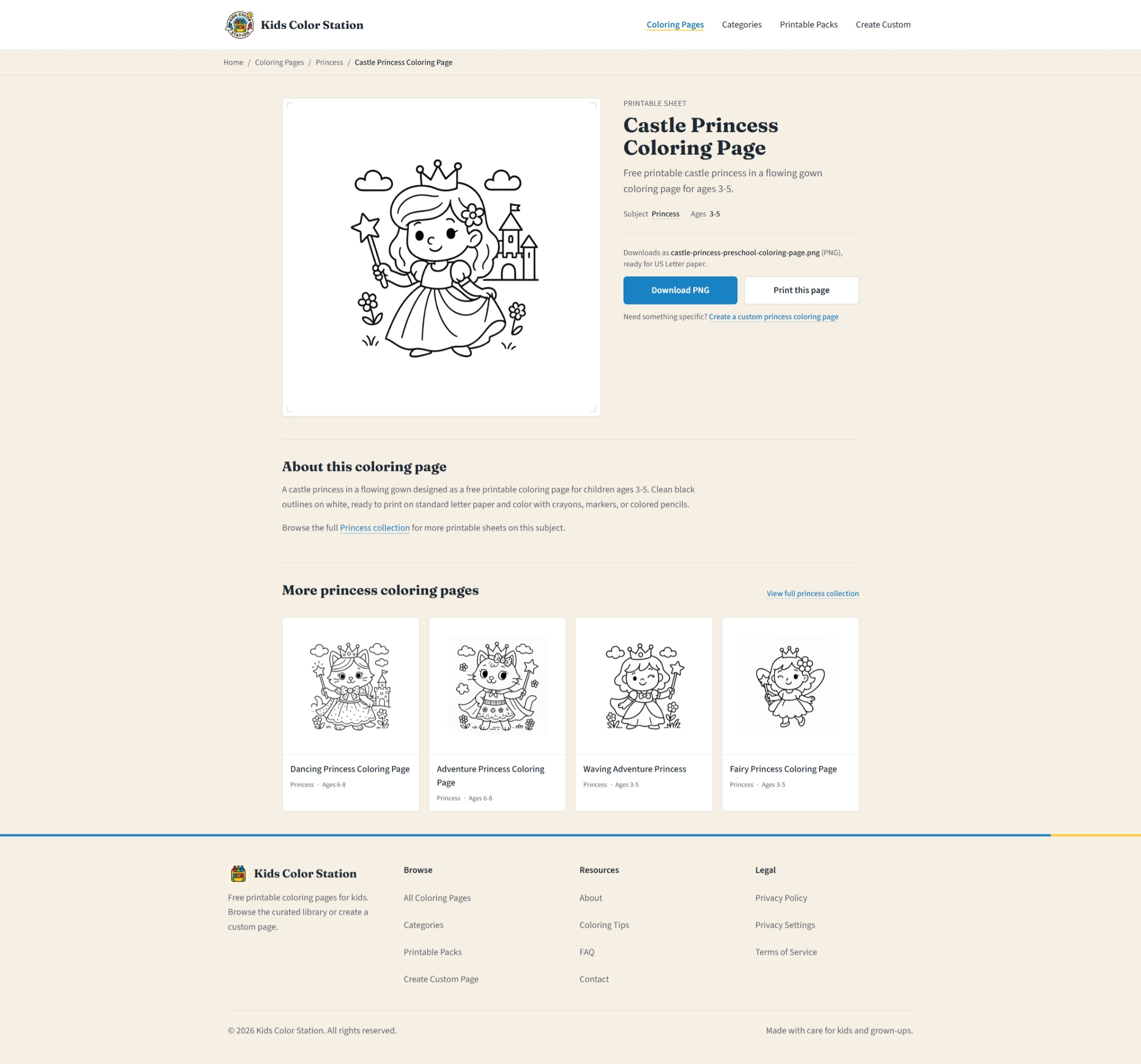
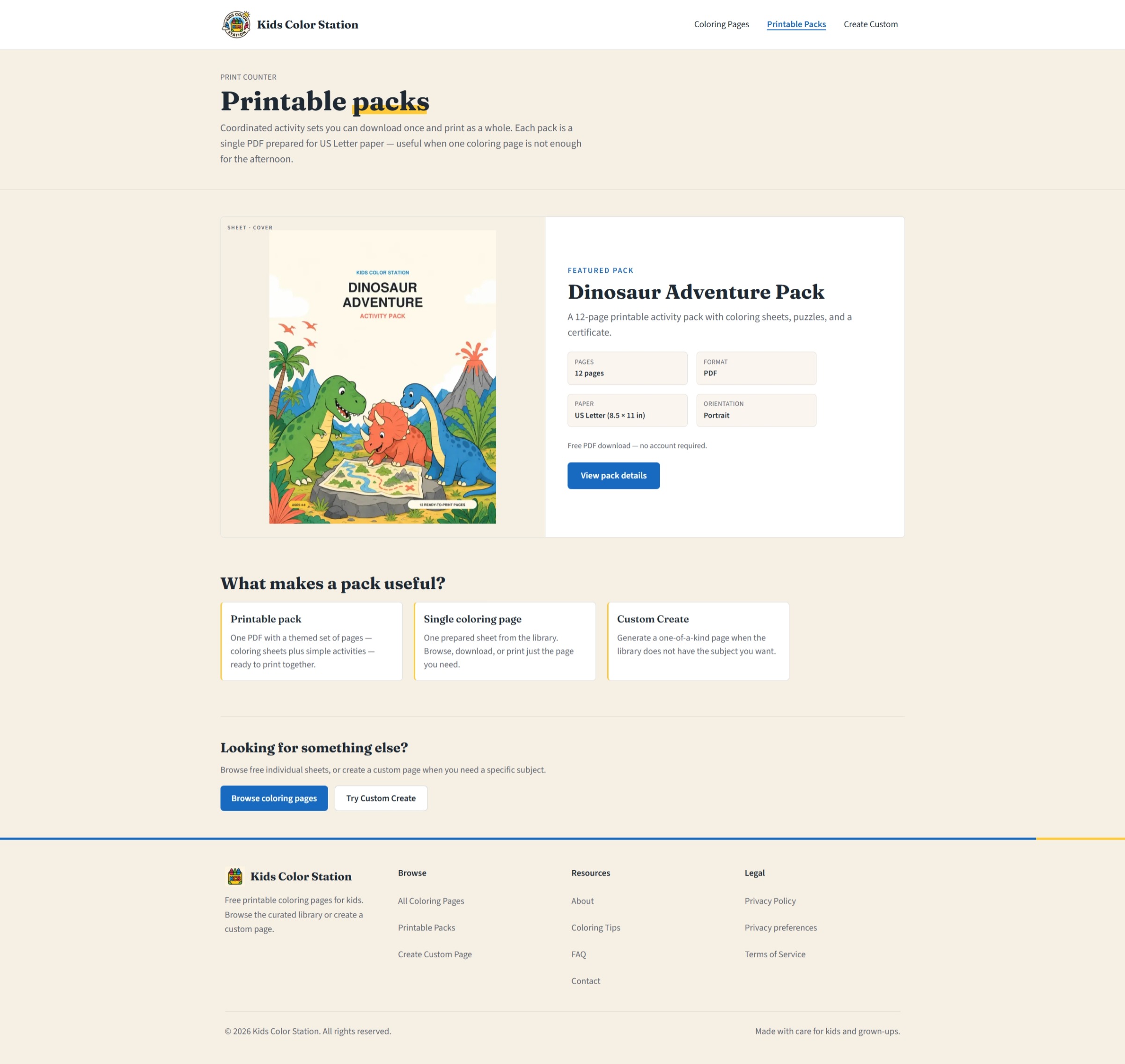
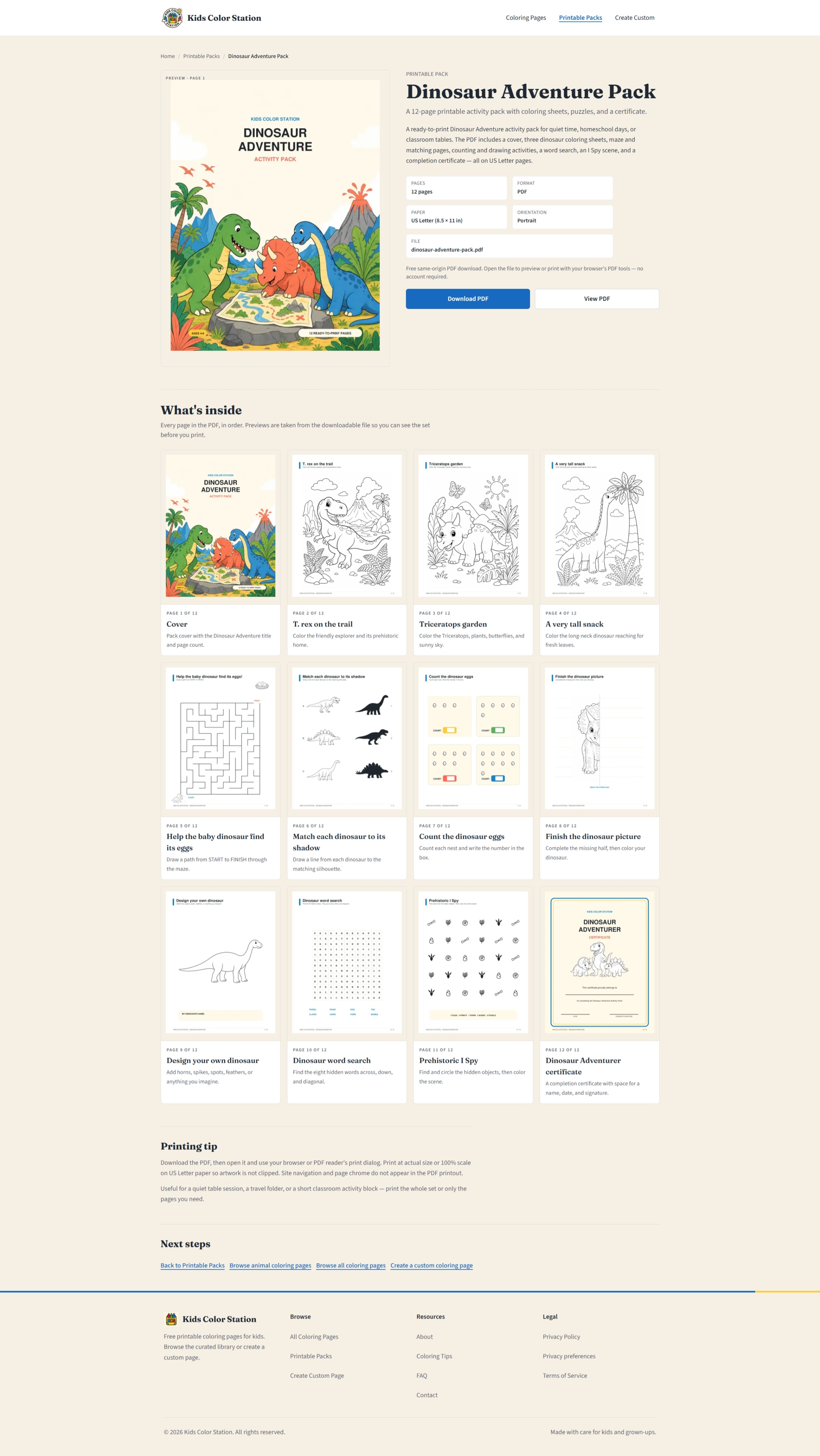
The new information architecture makes the prepared library the primary experience. Visitors can search by subject, browse category shelves, open individual page details, download coordinated PDF packs, or use Custom Create when the library does not contain what they need.
Key decisions
- Repositioned the product from an AI generator to a curated printable destination
- Created a recognizable Neighborhood Print Shop visual identity and reusable design system
- Replaced the previous category journey with a library-first search and discovery model
- Standardized coloring-page detail routes for previewing, downloading, and printing
- Added themed, multi-page PDF activity packs for longer-use occasions
- Retained Custom Create as a supporting feature rather than the center of the product
- Built reusable validation and release workflows to keep a growing content library consistent
- Added consent-gated analytics and removed advertising scripts to improve privacy and trust
- Designed responsive and print-specific behavior across mobile, desktop, and US Letter output
Project evolution
- Before: AI generation was the primary productAfter: Curated library is the main customer journey
- Before: Generic children’s-site presentationAfter: Distinctive Neighborhood Print Shop identity
- Before: Individual coloring pagesAfter: Individual sheets, custom pages, and coordinated PDF packs
- Before: Basic category navigationAfter: Searchable library with subject and age-based discovery
- Before: Inconsistent page experiencesAfter: Reusable page, card, search, action, and print patterns
- Before: Advertising-oriented monetization foundationAfter: Consent-controlled analytics with advertising removed
Selected screens
 (opens the full screenshot in a new tab)
 (opens the full screenshot in a new tab)
 (opens the full screenshot in a new tab)
 (opens the full screenshot in a new tab)
 (opens the full screenshot in a new tab)
View more screens(1)
 (opens the full screenshot in a new tab)